Utah Plumbing Prices Utah Plumbing Prices price guides for Utah homeowners
  • Services
  • Cities
  • How it works
  • About
Ask Mountain Man →
Check quote
Menu
  • Services →
  • Cities →
  • How it works →
  • About →
Ask Mountain Man →
Free. No spam. Built for Utah homeowners.

Utah Gas Line Pricing

Got a gas line quote?Check if it is fair.

Free. No signup. Takes about 30 seconds.

Check my quote
  • ✓ Free
  • ✓ No signup
  • ✓ 30 seconds
  • ✓ 12 services

What's under the hood

What's in a gas line installation

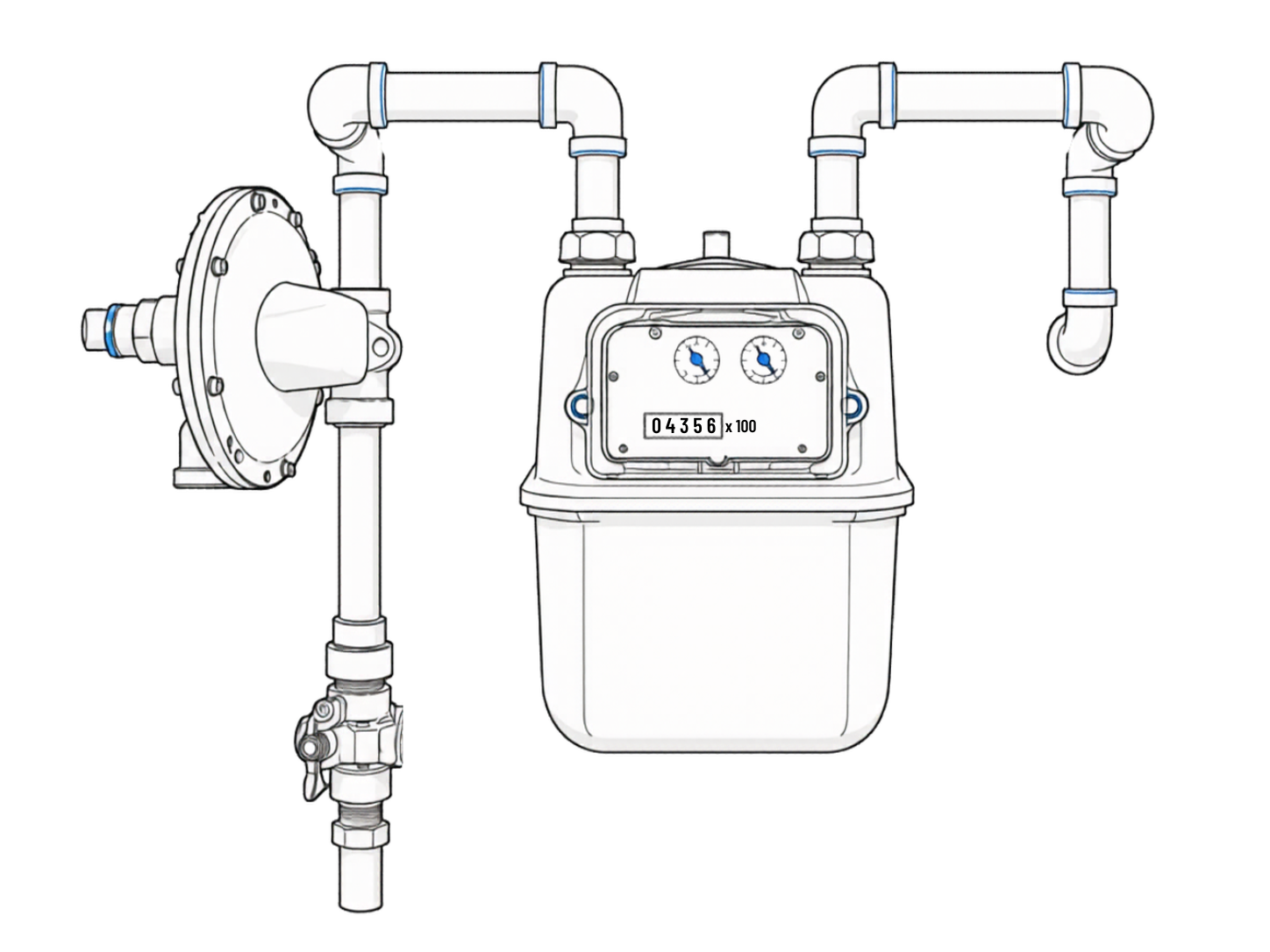
Gas piping is the riskiest plumbing work in your house. Every joint has to hold. Here's what a real install actually includes.

Plumbing system schematic
  • 1
    Meter

    The gas company owns the pipe up to and through the meter. Everything past it is yours. That's where the plumber's work starts.

  • 2
    Main line

    The main pipe runs from the meter and feeds every branch. Its size is based on how much total gas your appliances need when running together.

  • 3
    Branch lines

    Each appliance gets its own branch off the main. Bigger appliances need bigger branches. A tankless water heater needs a much bigger branch than a range or a dryer.

  • 4
    Sediment trap

    A short pipe stub with a cap that sits just before each appliance. It catches dirt, scale, and water in the gas line before they hit the appliance. Code requires one at every appliance. Cheap to add. Often skipped.

  • 5
    Appliance shutoff and flex line

    A shutoff valve at the appliance, then a flexible connector for the last hookup. The flex line is only for the last few feet — never as a main run. The shutoff lets you turn off gas to one appliance without killing it to the whole house.

Scope of work

What a standard gas line install covers

Gas work varies more than almost any other plumbing job. A simple appliance hookup and a whole-house re-pipe are different jobs. A real quote spells out what's in and what's out.

Typically included

  • Permit pulled with the city
  • Pipe and fittings sized for your appliances
  • Sediment trap at each appliance
  • Shutoff valve at each appliance
  • Pressure test before close-up
  • Leak check on every joint
  • Final inspection

Usually NOT included

  • Drywall, tile, or stucco fix after wall holes
  • The appliance itself (range, tankless, dryer, generator)
  • Electrical for power-vent or electric-start appliances
  • Propane-to-natural-gas conversion kits
  • Utility upgrades (if the meter is too small, that's a gas company job)
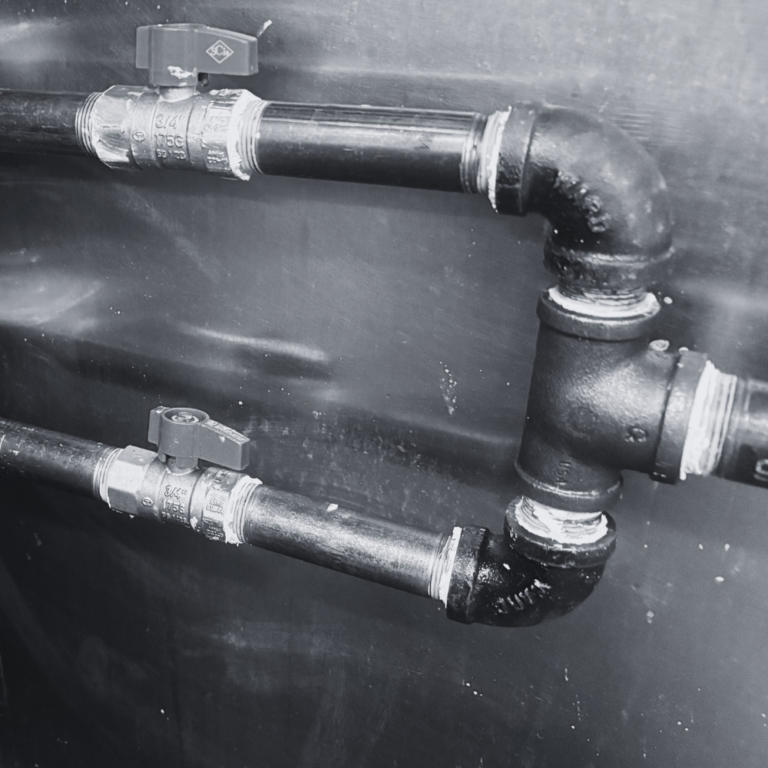
Photo of a riser educating gas price
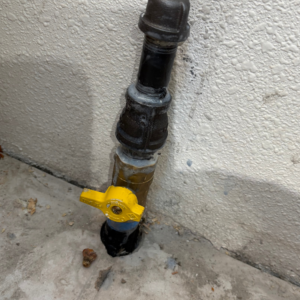
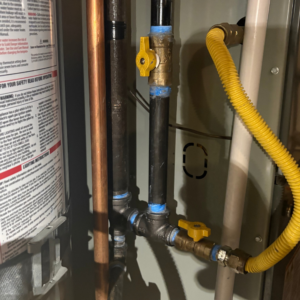
gas lines educating gas installation price
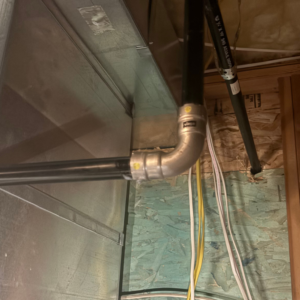
new press fitting price

Why prices vary

What moves the price between gas line quotes

Two gas line quotes for the same job can be hundreds or thousands apart for real reasons. Knowing why helps you read between the lines.

01

Pipe choice

Two main pipes get used. Black iron is the heavy traditional steel pipe — strong, but slow to cut, thread, and fit by hand. CSST is the flexible stainless pipe — faster to install, so labor costs less. Most modern jobs use CSST for that reason. Pipe size matters too. Bigger lines (3/4 inch and up) cost more in both material and labor than 1/2 inch.

02

Run length and access

A 15-foot run across an open basement ceiling is cheap. A 50-foot run through finished walls, a crawl space, or the attic is not. Every wall the plumber has to cut through adds time.

03

Old work the install uncovers

If your old lines are too small, made of old galvanized pipe, or missing sediment traps, code may require fixing them as part of the new work. Older houses turn up these surprises more often.

04

Permit, pressure test, inspection

Every real gas job includes a permit fee, a pressure test, and a final inspection. These aren't extra charges. They're how you know the work is safe.

Utah Plumbing Prices

Independent Plumbing Price Check

3 checks today

Got a plumbing quote? Check if it is fair.

See where your plumbing quote lands against the Utah pricing guide. No email required.

Opening the Utah price guide...
Visit Utah Plumbing Prices → Prices change with access, materials, permits, and the exact scope.

Red flags in a gas line quote

Gas is the one job where cutting corners can end in a fire. Each of these is worth a follow-up question before you sign.

1

"We don't need a permit for this"

Gas work almost always needs a permit. The permit triggers an inspection. The inspection catches mistakes. A plumber who skips the permit skips the second pair of eyes that protects you.

2

No pressure test in the quote

Gas lines go behind walls and under floors. Once they're closed up, you can't see a leak — you can only smell one after it's already happening. A pressure test before close-up is how a real plumber proves the line holds.

3

No sediment trap at the appliance

Code requires one at every gas appliance. Costs a few dollars. Quick jobs skip it. If your quote doesn't list it, ask.

4

Tankless water heater on the old tank's gas line

A tank water heater burns about 40,000 BTU per hour. A tankless burns 150,000 to 200,000. The line that fed your old tank is almost never big enough for a tankless. A plumber who skips the line upgrade is setting up an appliance that won't run right — and in the worst case, robbing gas pressure from your furnace at the same time.

From the field

Recent field work from Mountain Man Plumbing

Real recent jobs from Mountain Man Plumbing across the Wasatch Front.

  • gas Line Addition Salt Lake City | Master Plumber Certified | Mtn Man A Salt Lake City homeowner reached out because they wanted to upgrade their outdoor living space and make it more functional year-round. The plan was to add ... View on Mountain Man →

See all past work on mtnmanplumbing.com →

Need a real plumber to look?

Ask Mountain Man
Tyler from Mountain Man Plumbing

Who built this

I am Tyler. I have been a plumber in Salt Lake for 10+ years.

One of the questions I get from homeowners is: was that gas line quote fair?

Sometimes yes. Sometimes no. This site helps you ask better questions before you approve the work.

Read my story

Common Questions

Straight answers before you book.

What does a gas line installation cost in Utah?

Gas line work runs from a few hundred dollars for a simple appliance hookup on an existing line, up to several thousand for a whole-house gas re-pipe in an older home. The honest answer is "it depends on the job" — line size, run length, code upgrades, and how much old pipe gets touched all change the number. Drop your quote into the Second Opinion tool above for a fair-or-not check against real Utah numbers for your scope.

Black iron pipe vs CSST — which is better?

Both work. Black iron is the traditional steel pipe — strong and proven, but slow to cut and thread by hand. CSST (flexible stainless pipe — brand names Gastite, TracPipe) installs much faster, so most modern jobs use it. CSST is usually cheaper on the install bill not because the material is cheaper but because the labor is. One thing worth knowing: older yellow CSST has to be bonded to your home's electrical ground for lightning safety. Newer black-coated CSST (FlashShield, CounterStrike) is built with that protection in the jacket and doesn't need extra bonding.

Why does a tankless water heater need a different gas line than my old tank?

Gas demand. A tank water heater burns about 40,000 BTU. A tankless burns 150,000 to 200,000 BTU because it heats water on demand instead of storing it. That's four to five times more gas flowing per minute. The skinny line that fed your old tank can't move that much gas. The fix is usually upsizing from 1/2 inch to 3/4 inch. A plumber who skips this is setting up an appliance that won't run right.

What is a sediment trap and do I need one?

It's a short piece of pipe with a cap, installed right before each gas appliance. It catches dirt, scale, and water that travel through the line before they hit the appliance valve. Code requires one at every gas appliance. Costs a few dollars. A plumber who skips it is saving five minutes and selling you out on code.

What is a pressure test and why does it matter?

Before any new gas line gets closed up behind drywall, the plumber pumps it up to a higher pressure than normal gas pressure and watches it for a set time. If the pressure drops, there's a leak somewhere and they find it before the wall closes. A line that fails the test gets fixed. One that doesn't get tested gets buried with whatever leaks are in it.

Can I do gas piping myself?

In most Utah cities, no. Gas work needs a permit, and only a licensed plumber can pull the permit. Even where DIY is technically legal, most homeowner's insurance will deny a fire or explosion claim that traces back to DIY gas work. The materials are cheap. The labor is where the safety lives.

Do I need a permit for gas work?

Almost always yes. New runs, line changes, appliance conversions (propane to natural gas or back), and most repairs need a permit and an inspection. Swapping an old appliance for a new one on an existing line is the one common exception in some cities. A plumber who says "we don't need a permit" is either wrong or hoping to save the fee at your expense.

How does altitude affect gas appliances in Utah?

Most gas appliances are rated at sea level. Every 1,000 feet up cuts their output by about 3 to 4 percent. Salt Lake City sits at about 4,200 feet, so appliances run about 15 percent below their rated output unless they're set up for altitude. Modern appliances come with high-altitude conversion kits. The installer is supposed to swap in the right part. Worth asking about.

How long does a gas line installation take?

A simple appliance hookup is 30 to 60 minutes plus the pressure test. A new short run for one appliance is half a day. A dedicated tankless line is usually most of a day. A whole-house re-pipe is multiple days. Pressure testing and waiting on the inspector adds time on top.

Should I switch from electric to gas?

Depends on three things: (1) is gas already plumbed near the appliance, (2) does running new gas line cost less than new electric, (3) what are your local gas vs electric rates. In most of Utah, gas is cheaper per BTU than electric resistance heat, so big users (water heater, furnace, dryer) usually pencil for gas — IF the gas line is already there. If new line costs thousands, the math gets tighter. Heat pump electric is the third option worth pricing.

What about CSST and lightning?

Older yellow CSST (installed widely in the 2000s) has been linked to fires when a nearby lightning strike arcs through the thin stainless wall. The fix is bonding — connecting the pipe to your home's grounding system so the strike has a path to ground. Bonding has been code-required for years. Newer black-coated CSST (FlashShield, CounterStrike) has that protection built into the outer jacket and doesn't need extra bonding. If your house has yellow CSST and you don't know if it's bonded, that's worth checking.

What questions should I ask before signing a gas line quote?

Five questions: (1) Are you pulling a permit and who's doing the final inspection? (2) What pipe material and size, and why? (3) Is the pressure test included, at what pressure for how long? (4) Will you install a sediment trap at every appliance? (5) Can I see the plumber's license number on the permit?

Find your city.

Prices can change by access, older homes, travel time, and local code needs.

Sandy Salt Lake City Midvale Murray West Jordan South Jordan Draper Cottonwood Heights Holladay Millcreek West Valley City Taylorsville Herriman Riverton Bluffdale Lehi Park City Magna South Salt Lake

Before you trust the total

What this gas line installation quote should tell you

A fair plumber should be able to tell you what failed, what they plan to do, what is included, and what could change the price. If two quotes describe different work, the cheaper number proves nothing.

01

How is gas line installation usually priced?

Quotes may be per defined run or project. Compare the route, pipe size and material, valves, appliance connector, pressure test, permit and inspection, wall access, and startup responsibility.

02

What can make a gas line installation quote higher?

A meter upgrade, long run, finished-wall access, concealed route, multiple appliances, high-BTU equipment, rooftop work, or propane conversion changes the project.

03

Was the new line sized from the total connected load?

Ask to see the appliance BTU input, developed length, pipe sizing basis, test and inspection scope. A line that reaches the appliance is not necessarily a line that can safely supply it.

Utah sources checked: Utah DOPL plumbing licensing · Utah plumbing rules and adopted code.
Utah Plumbing Prices Utah Plumbing Prices

A free site to check if your Utah plumbing quote is fair. Built and run by a working master plumber.

Browse
  • All services
  • All cities
  • Check a quote
  • How it works
About
  • About this site
  • Privacy
  • Terms
Run by
Mountain Man Plumbing
Tyler Nerdin. Salt Lake City
Licensed Utah master plumber
License #XXXXX
mtnmanplumbing.com →
Gives back
Plumbing Gives Back
Community fund supporting Utah neighbors. A share of every Mountain Man job goes to local causes.
Launching later 2026
Copyright 2026 utahplumbingprices.com Built from 20 years of Utah plumbing work. Updated weekly. Made in Salt Lake City