Straight answers before you book.
What does a water heater replacement usually cost in Utah?
Most standard 40-50 gallon tank replacements land between $1,800 and $4,200 installed. Tankless installs run $4,500-$7,500 because of the gas line upsizing and venting work. The wide range is real — it depends on the unit, the existing setup, and who's doing the work.
Why do quotes for the same job vary by thousands of dollars?
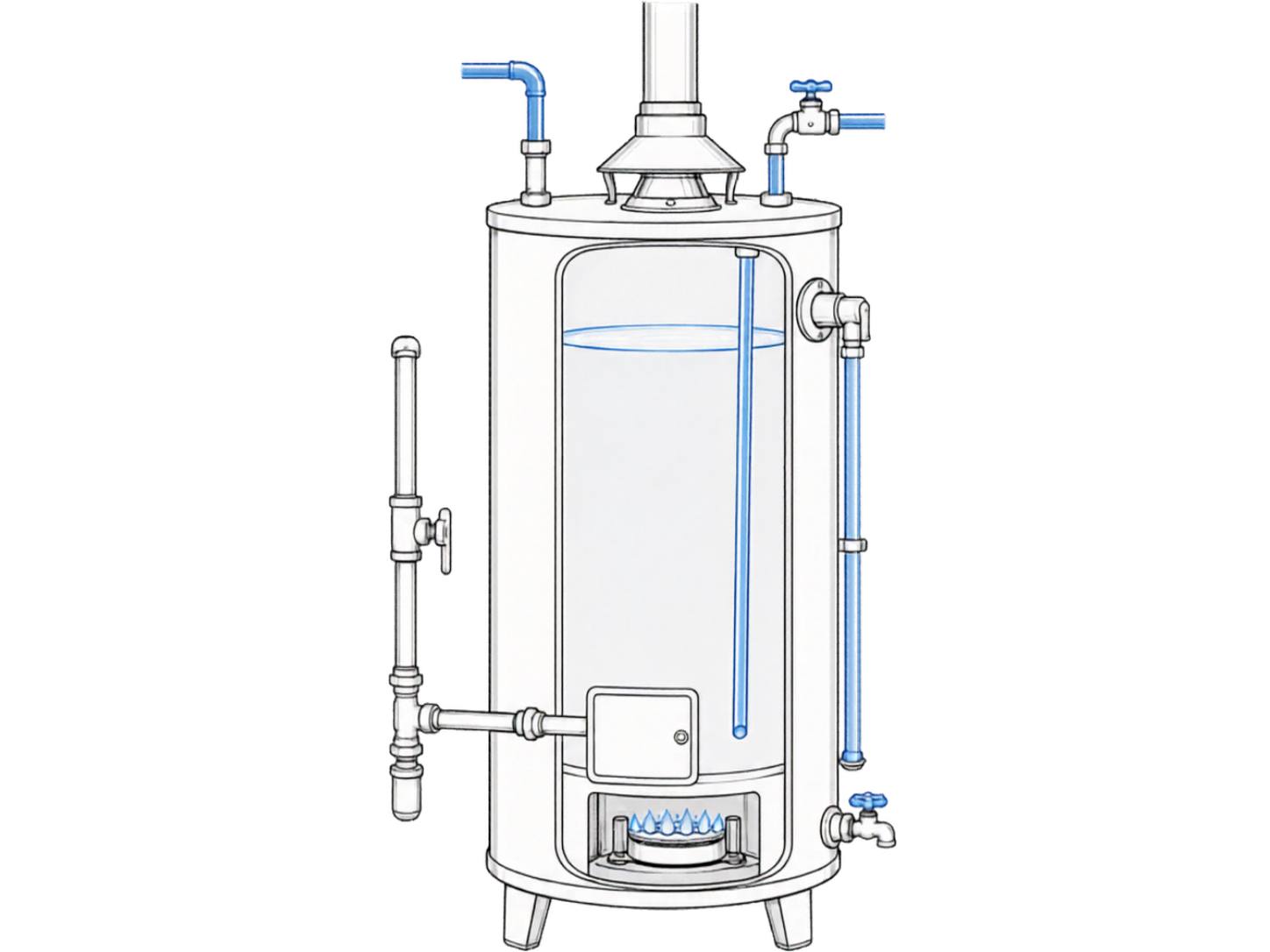
Three reasons. One: the unit itself (a base Bradford White costs less than a premium tankless). Two: hidden scope (does your install need a new T&P drain line, expansion tank, gas line upsize, drain pan?). Three: business model. A national franchise with a flat-rate book and a commissioned salesperson has to charge more to cover that overhead. An owner-operator usually quotes lower for the same scope.
Tank vs tankless — which is actually cheaper?
Tank is cheaper up front (usually by $2,500-$4,000). Tankless wins long-term on energy efficiency and lifespan (20+ years vs 10-12 for tank), and frees up floor space. But the install cost is higher because tankless almost always needs a gas line upsize and dedicated venting. If you're not planning to stay 8+ years, tank usually pencils better.
What size water heater do I need?
Rule of thumb for tank: 40 gallon for 1-3 people, 50 gallon for 3-4, 75-80 gallon for 5+ or if you have a soaker tub. Tankless is sized by GPM (gallons per minute) — a 7-8 GPM unit handles most single-family homes; if you want two showers running at once you need 9+ GPM. Going one size up "just in case" is a common upsell that rarely pays off.
Which brand should I buy?
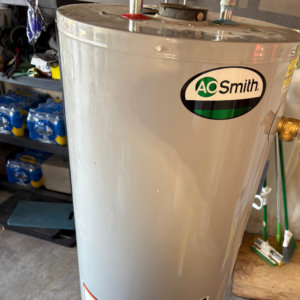
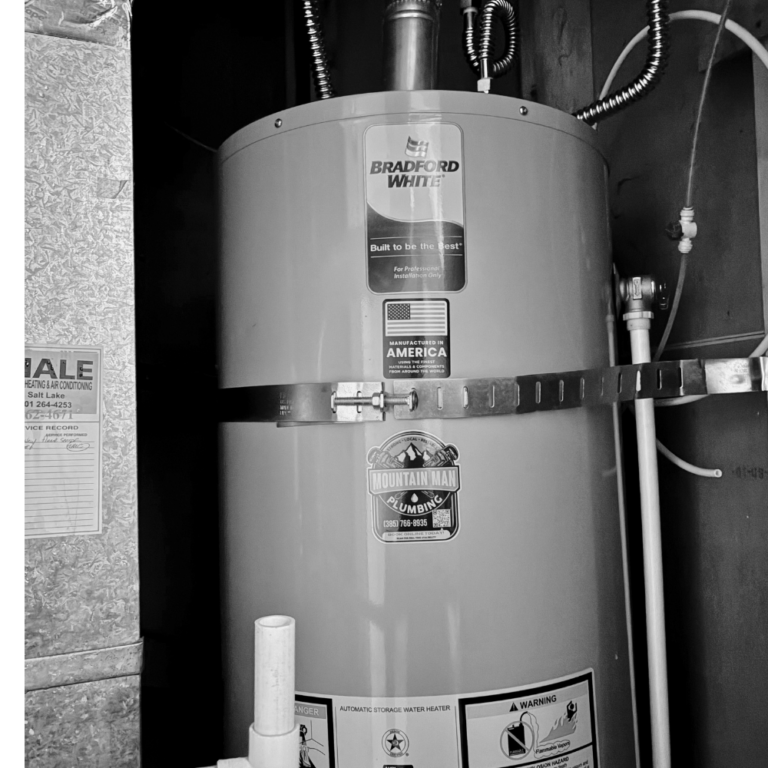
Bradford White is the contractor favorite in Utah — built in Pennsylvania, sold only through plumbers, replaceable parts. Rheem and AO Smith are also solid. Avoid the cheapest big-box options — they cut corners on the tank lining and the parts are harder to source 5 years in. For tankless: Navien, Rinnai, Noritz are the three workhorses.
How long should a water heater last?
Tank: 8-12 years for standard, up to 15 with annual flushing and softened water. Tankless: 18-22 years with annual descaling. If yours is 10+ years old and you're seeing rust at the base, rumbling, or rusty hot water, replacement is the safer call before it fails on a Sunday night.
Should I repair or replace?
Rule of thumb: if the repair cost is more than 40% of replacement and the unit is past half its expected life, replace. Tank leaks (water on the floor, not just the drain pan) = replace, no debate. Bad thermocouple, pilot issues, or a sediment flush on a 5-year-old unit = repair.
Is the Utah hard water actually killing my water heater?
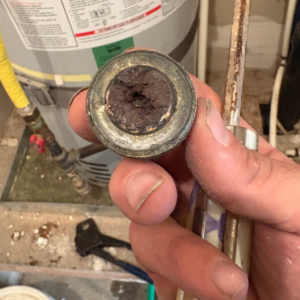
Yes. Wasatch Front water averages 15-20 grains of hardness, which is "very hard." Sediment builds up at the bottom of a tank, insulates the burner from the water, makes the unit work harder, and shortens lifespan by 2-4 years on average. A softener pays for itself if you're running on city water and replacing units every 8 years instead of 12.
Are heat pump water heaters worth the hype?
For the right house, yes. They run 3-4x more efficient than electric resistance, and the federal tax credit (currently 30% up to $2,000) takes a big bite out of the install. Downsides: they need ~700 cubic feet of space, they make some noise (like a small AC), and they recover slower than gas. Best fit: unfinished basement, electric-only home, not a tight closet install.
What questions should I ask before signing a quote?
Four questions: (1) Is this itemized or a flat-rate book price? (2) Does this include all the code-required parts (T&P, expansion tank, drain pan if needed)? (3) What's not included that might come up? (4) What's the warranty on the unit AND on your labor? Anyone who gets defensive about those four is showing you something.
What add-ons are worth it vs which are upsells?
Worth it: expansion tank (often required and protects the unit), drain pan if it's in a finished space, softener pre-treatment on hard water. Usually upsells: extended warranties beyond the manufacturer's, "premium" anodes you can swap yourself, "annual maintenance plans" that are mostly profit margin.
Why is my install quote so much higher than the price of the unit at Home Depot?
Because the unit is maybe 25-40% of the total job. The rest is labor, code parts, disposal, and the install warranty. Anyone quoting you "just the unit price plus a couple hundred for labor" is either missing scope or planning to surprise you mid-job.