Utah Plumbing Prices Utah Plumbing Prices price guides for Utah homeowners
  • Services
  • Cities
  • How it works
  • About
Ask Mountain Man →
Check quote
Menu
  • Services →
  • Cities →
  • How it works →
  • About →
Ask Mountain Man →
Free. No spam. Built for Utah homeowners.

Utah Water Softener Pricing

Got a water softener quote?Check if it is fair.

Free. No signup. Takes about 30 seconds.

Check my quote
  • ✓ Free
  • ✓ No signup
  • ✓ 30 seconds
  • ✓ 12 services

What's under the hood

What's in a water softener install

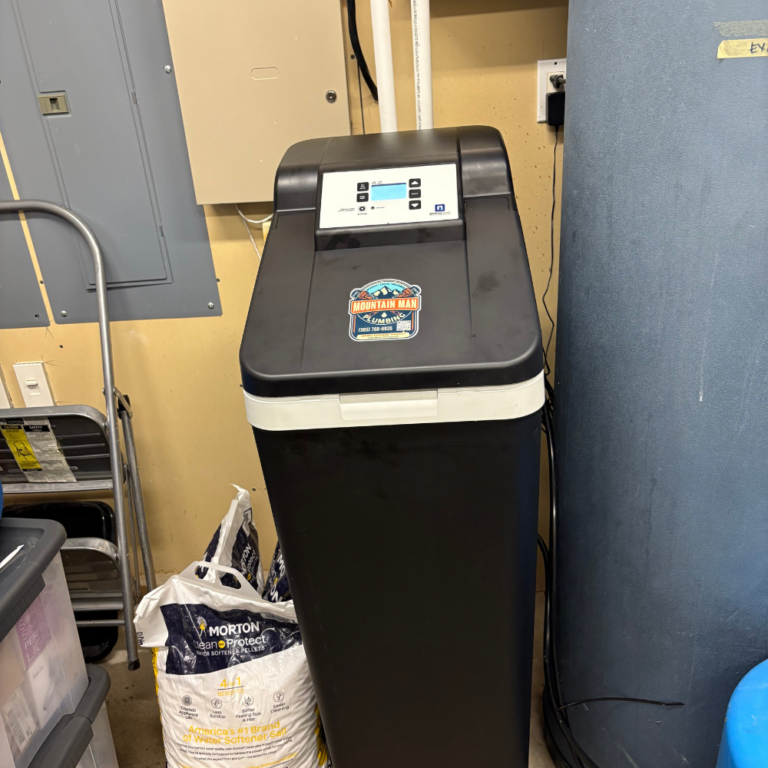
A water softener takes the hardness minerals (calcium and magnesium) out of your water so they don't scale up your water heater, fixtures, and dishwasher. In most of Utah the water runs 15 to 20 grains of hardness — that's the "very hard" range, and it's why almost every Wasatch Front home needs a softener.

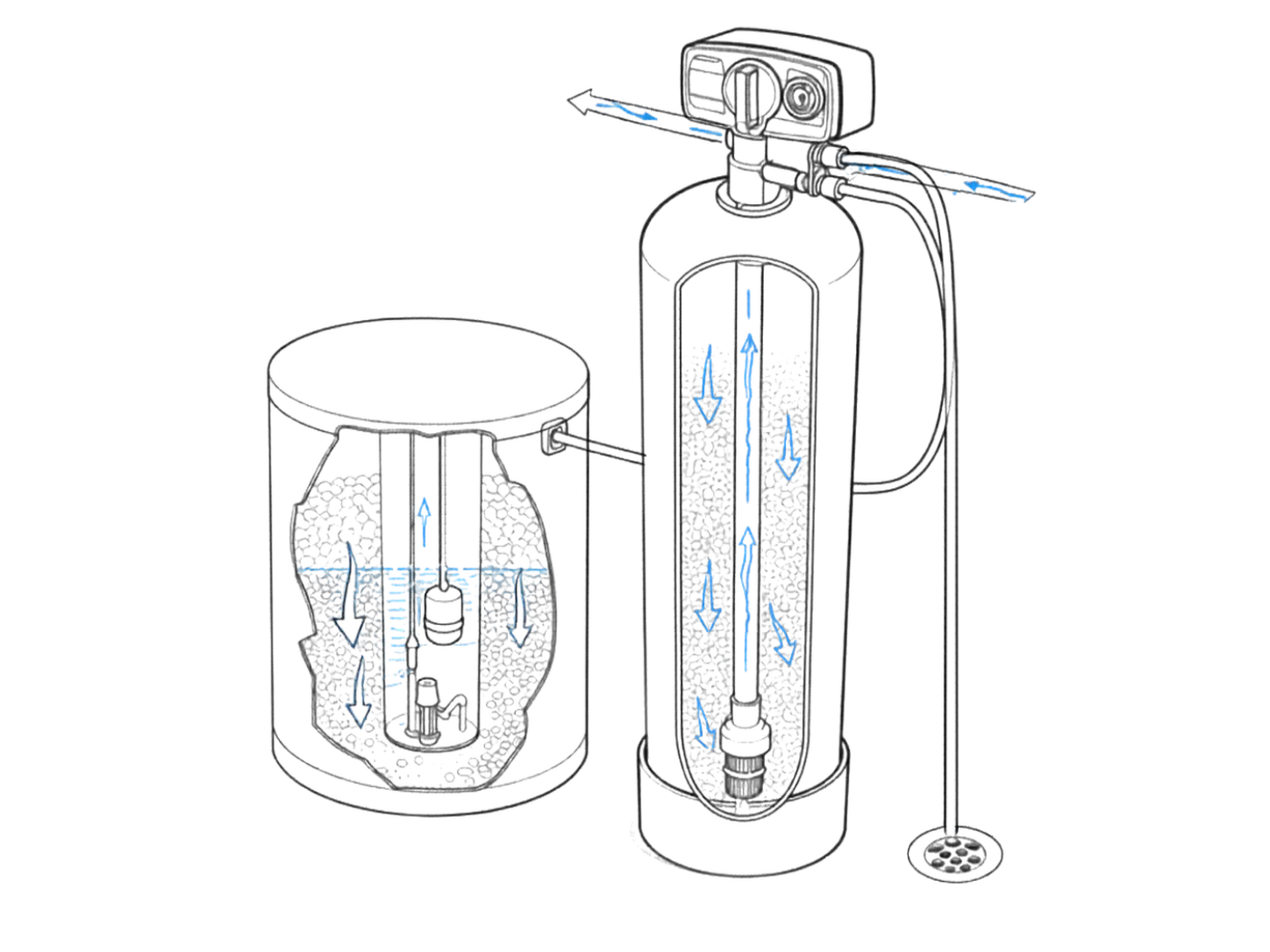
Plumbing system schematic
  • 1
    Resin tank

    The tall tank where the actual softening happens. Inside is a bed of resin beads that trade their sodium ions for the hard minerals in your water. The clean water that comes out the other side is what feeds your house.

  • 2
    Brine tank

    The shorter tank where you load salt. Every few days the system pulls salt water from here, flushes it through the resin tank, and washes the trapped hardness minerals down the drain. That's called regeneration.

  • 3
    Control valve

    The brain on top of the resin tank. It schedules when the system regenerates, manages the flow, and tracks how much water you've used. Brand-name valves like Fleck and Clack are the contractor favorites because parts and repairs are easy years out.

  • 4
    Bypass loop for outdoor water

    A pipe arrangement that sends your outdoor faucets and irrigation lines around the softener so they get hard water. You don't want to soften lawn and garden water — your plants don't need it and it wastes salt.

  • 5
    Drain line

    Where the brine flushes during regeneration. Code requires it to discharge into a proper drain (floor drain, laundry standpipe) with an air gap so dirty drain water can't get sucked back into your soft water.

Affordable water softener

Scope of work

What a standard water softener install covers

Water softener jobs vary a lot based on whether the house already has a softener loop or not. A real quote spells out what's in and what's out.

Typically included

  • New softener unit (resin tank, brine tank, control valve)
  • Connection to your main cold water line
  • Outdoor bypass loop so irrigation stays on hard water
  • Drain line to the nearest code-compliant drain with air gap
  • First salt loaded and system commissioned

Usually NOT included

  • Whole-house sediment pre-filter
  • Drywall, tile, or finish repair after access
  • Electrical work if a new outlet has to be added
Old_water_heater_Cheaply_replaced
Reasonable_Water_Heater_repair
Utah_Water_Heater_reasonable_Replacement

Why prices vary

What moves the price between water softener quotes

Two softener quotes for the "same" job can be hundreds or thousands apart for real reasons. Here's what changes the number.

01

System type

Standard salt-based softeners with a Fleck or Clack control valve are the workhorse — proven, repairable, reasonable cost. Kinetico systems are non-electric (they regenerate on water pressure instead of a timer) and run a lot higher. Dual-tank systems give you soft water 24/7 even during regen and cost more than single-tank setups.

02

Sizing for your hardness

Softeners are rated in grain capacity. For Utah's hard water and a family of four, a 48,000-grain unit is the common right answer. Too small means the system runs through salt fast and the resin dies young. Too big is wasted money. A real plumber sizes it to your actual water hardness and household size.

03

Existing softener loop vs new install

If your house was plumbed for a softener (you'll see a copper or PEX loop in the basement or utility room near the main), the install is faster. If there's no loop, the plumber has to cut into the main, run a bypass, and route a new drain line — that's more work.

04

Add-ons

A reverse-osmosis drinking water system under the kitchen sink runs alongside a softener for a lot of homes. A whole-house sediment pre-filter is worth it if you're on well water or city water with visible particulates. Both add real cost but are usually quoted together with the softener.

Reasonably priced water softener
cheap water softer combo
Carrying away old brine tank

Utah Plumbing Prices

Independent Plumbing Price Check

3 checks today

Got a plumbing quote? Check if it is fair.

See where your plumbing quote lands against the Utah pricing guide. No email required.

Opening the Utah price guide...
Visit Utah Plumbing Prices → Prices change with access, materials, permits, and the exact scope.

Watch for these

Red flags in a water softener quote

Water softeners attract more high-pressure sales than almost any other plumbing job. Each of these is worth a follow-up question before you sign.

"Free water test" from a door-knocker

A salesperson shows up unannounced, runs a water test (your water comes back "terrible"), and pitches you a $5,000 to $8,000 system on the spot. The test is theater. The system is overpriced. Real water testing is cheap and any licensed plumber will do it without a sales pitch attached.

Magnetic or electronic "descalers" sold as softeners

Some companies sell magnetic coils, electronic descalers, or template-assisted crystallization (TAC) systems and call them "softeners." They aren't. They change how minerals deposit on surfaces in some cases, but your water still has all the hardness in it. If the quote doesn't mention salt and a brine tank, it isn't a real softener.

No outdoor bypass loop in the quote

Softening your lawn irrigation water is a waste of salt and money. Every install should route outdoor faucets and sprinklers around the softener. If the quote doesn't mention an outdoor bypass, ask.

Push for the biggest unit "for future needs"

Common upsell pattern — sales tells you to get an 80,000 or 100,000-grain unit for a family of three. Bigger doesn't mean better. The right size is based on your real hardness and your real household. Oversized units sit idle, regenerate too rarely, and the resin dies young.

From the field

Recent field work from Mountain Man Plumbing

Real recent jobs from Mountain Man Plumbing across the Wasatch Front.

  • Alta Water Softener High end homes deserve the highest quality water. When one of our trusted property managers in Alta reached out concerned about the water quality in a premiu... View on Mountain Man →

See all past work on mtnmanplumbing.com →

Need a real plumber to look?

Ask Mountain Man
Tyler from Mountain Man Plumbing

Who built this

I am Tyler. I have been a plumber in Salt Lake for 10+ years.

The number one question I get from homeowners is: was that water softener quote fair?

Sometimes yes. Sometimes no. This site helps you ask better questions before you approve the work.

Read my story

Common Questions

Straight answers before you book.

What does a water softener cost in Utah?

A standard salt-based whole-house softener installed by a licensed Utah plumber typically lands between $2,000 and $3,500 — that range covers the unit, the install labor, the outdoor bypass loop, and the drain line. Premium non-electric systems like Kinetico, or dual-tank setups, run several thousand more. Adding a reverse-osmosis drinking water system under the kitchen sink is a separate cost. Drop your quote into the Second Opinion tool above for a fair-or-not check against real Utah numbers for your scope.

Do I actually need a softener in Utah?

Probably yes. Most of the Wasatch Front runs 15 to 20 grains of water hardness — that's the "very hard" range. Hard water cuts water heater life by 2 to 4 years on average, leaves scale in fixtures and on shower glass, makes soap and shampoo work poorly, and clogs up dishwashers and washing machines. A softener pays for itself in appliance lifespan if you're staying in the house more than a few years.

Salt-based vs salt-free — what's the difference?

Salt-based softeners actually remove the hardness minerals from your water through ion exchange. Salt-free systems (also called water conditioners) change the structure of the minerals so they're less likely to stick to surfaces, but the hardness is still in the water. Salt-free systems are easier to maintain (no salt to load) but don't give you "real" soft water. If you want the slippery, soap-lathering, no-scale experience, you need salt-based.

What brand should I buy?

For the control valve (the brain), Fleck and Clack are the contractor favorites — parts are everywhere, repairs are straightforward 10 years out. Kinetico is the premium non-electric option — proven, durable, expensive. Skip the cheapest big-box options — they use proprietary parts that get hard to source, and the warranty on the resin is short.

What size softener do I need?

Sized by grain capacity. For a Utah household, the rough math is: people in home × gallons per day × your water hardness in grains × 7 days = the grain capacity needed before regen. For a family of 4 at 18 grains, that's typically a 48,000-grain unit. Bigger isn't better — oversized softeners regenerate too rarely and resin life suffers.

What's a salt loop or softener loop and why does my house need one?

It's a plumbing arrangement that lets cold water bypass the softener to feed outdoor faucets and irrigation lines. Softening your lawn is wasted salt and money — plants don't care, and it just runs your softener through regen cycles faster. A proper install always includes this loop.

What kind of salt should I use?

Pellet salt is the standard for most softeners — it dissolves cleanly and doesn't bridge in the brine tank. Solar salt and rock salt are cheaper but more likely to leave sediment that gunks up the valve. Avoid anything labeled "rust remover" salt unless your softener manual specifically calls for it.

How often do I need to add salt?

Depends on water hardness, household size, and unit size. Most Utah families running a 48,000-grain softener load a 40-pound bag every 4 to 8 weeks. Check the brine tank monthly and refill when the salt level drops below half.

How long do softeners last?

The resin inside a quality softener lasts 10 to 15 years on city water, less on well water with iron. The control valve typically goes 7 to 12 years. Replacing the resin alone is cheaper than replacing the whole unit and is worth doing once before retiring the system.

Do I need a separate drinking water filter?

A softener replaces hardness minerals with a small amount of sodium. Most people don't notice the taste. If you do, or if you want extra filtration for contaminants beyond hardness, a reverse-osmosis system under the kitchen sink gives you separate dedicated drinking water. RO systems run separately from the softener and have their own install cost.

Can I install a softener myself?

If the house already has a softener loop and a drain nearby, a confident DIYer can swap one in. New installs that require cutting into the main, plumbing a bypass loop, and routing a code-compliant drain line are real work — and getting the drain air gap wrong is a code violation that backflow-tests will catch.

What questions should I ask before signing a water softener quote?

Five questions: (1) What brand and grain-capacity unit are you installing, and why that size for my hardness? (2) Does this include an outdoor bypass loop so irrigation stays hard? (3) Where will the drain line discharge? (4) What's the warranty on the resin and on the install labor? (5) What kind of salt do I need to load, and how often?

Find your city.

Prices can change by access, older homes, travel time, and local code needs.

Sandy Salt Lake City Midvale Murray West Jordan South Jordan Draper Cottonwood Heights Holladay Millcreek West Valley City Taylorsville Herriman Riverton Bluffdale Lehi Park City Magna South Salt Lake

Before you trust the total

What this water softener quote should tell you

A fair plumber should be able to tell you what failed, what they plan to do, what is included, and what could change the price. If two quotes describe different work, the cheaper number proves nothing.

01

How is water softener usually priced?

A useful quote identifies the system capacity and control, installation plumbing, bypass, drain and air gap, startup, settings, warranty, maintenance, and any separate prefilter or reverse-osmosis system.

02

What can make a water softener quote higher?

No drain, no nearby power, finished-wall access, large service piping, outdoor installation, iron or sediment treatment, or rerouting kitchen and hose-bib branches can add scope.

03

Was the system sized from a water test and household demand?

Compare hardness, iron if relevant, people and peak use, usable capacity, regeneration settings, salt efficiency, warranty, and ongoing service. Tank size alone is not system sizing.

Utah sources checked: Utah DOPL plumbing licensing · Utah Division of Drinking Water.
Utah Plumbing Prices Utah Plumbing Prices

A free site to check if your Utah plumbing quote is fair. Built and run by a working master plumber.

Browse
  • All services
  • All cities
  • Check a quote
  • How it works
About
  • About this site
  • Privacy
  • Terms
Run by
Mountain Man Plumbing
Tyler Nerdin. Salt Lake City
Licensed Utah master plumber
License #XXXXX
mtnmanplumbing.com →
Gives back
Plumbing Gives Back
Community fund supporting Utah neighbors. A share of every Mountain Man job goes to local causes.
Launching later 2026
Copyright 2026 utahplumbingprices.com Built from 20 years of Utah plumbing work. Updated weekly. Made in Salt Lake City